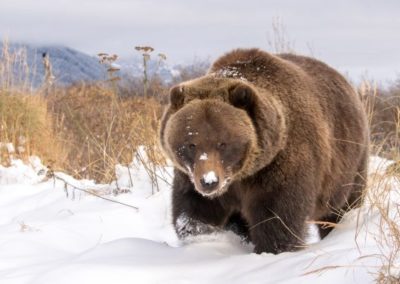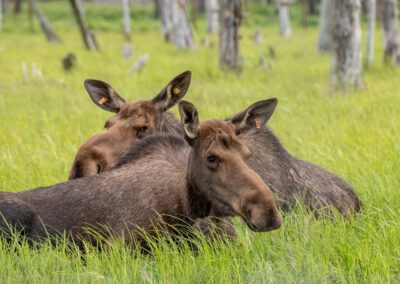
Meet the Locals

Where the animals are our greatest ambassadors.

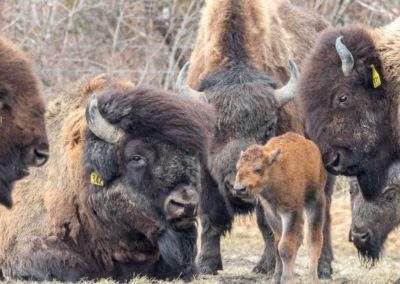
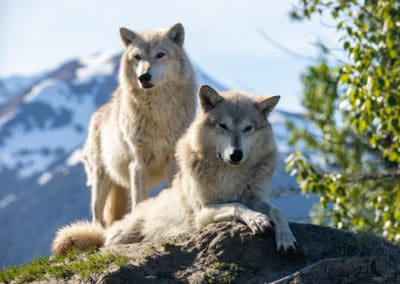
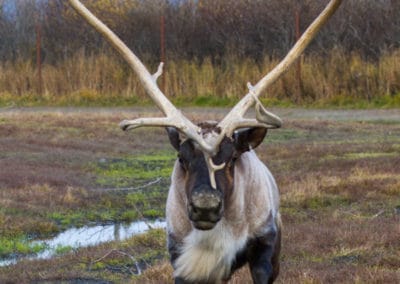
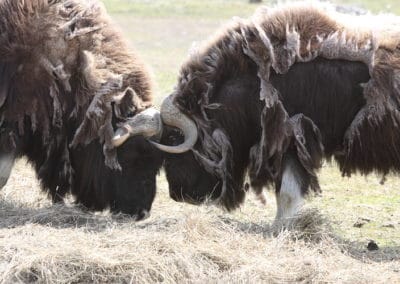
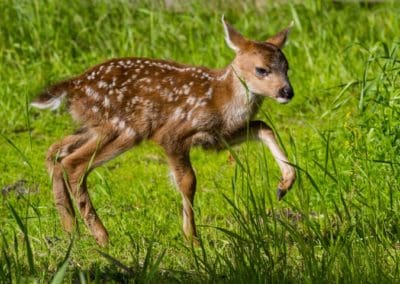
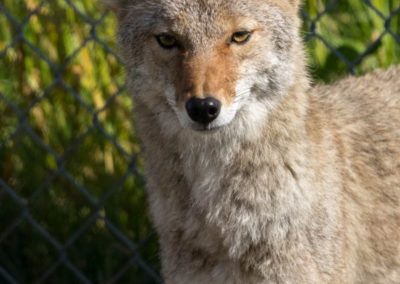
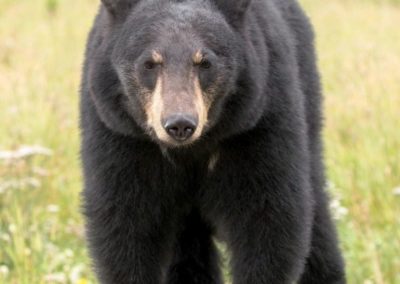
Most of the animals that have come to AWCC have either been orphaned or injured.
With consent from the Alaska Department of Fish and Game, animals taken in by AWCC are cared for by our animal care staff and are given a permanent home at AWCC.
Other Common Species at AWCC

In addition to the animals that live in our care, many wild animals and plants call AWCC home!
This is not an exhaustive list of the species that live in Portage Valley, but these are some of the most common.

Black Capped Chickadee

Black-capped Chickadee (Poecile atricapillus)
“naghuynisdi” – Upper Inlet Dena’ina word

This active , acrobatic, tiny bird lives in forested regions of Alaska year-round. Chickadees are specially adapted to survive Alaska’s winters with much denser, better-insulating plumage than other songbirds, their size and a special ability to put on fat quickly. Its song is often a 2 or 3 note whistle that sounds like “Hey, sweetie.” Look and listen for these birds in the trees or flying around AWCC.

Common Raven
Common Raven (Corvus corax)
“delgga” – Upper Inlet Dena’ina word

The common raven is a member of a family of birds known as the Corvidae, which includes jays, crows, and magpies. Ravens have large, stout bills, shaggy throat feathers, and wedge-shaped tails. Ravens exhibit a large range of vocalizations including trills, chirps, cries, and cat-like meows and can often be heard around AWCC. Ravens sometimes take advantage of any leftovers animals at AWCC don’t finish or trash dropped by visitors. Please do not feed the birds!

Black Billed Magpie
Black-billed Magpie (Pica hudsonia)
“k’ahtal’iy” – Upper Inlet Dena’ina word

Magpies have long tails, thick bills, and can appear entirely black and white, but in good light the wings and tail shine with blue-green iridescence. As opportunistic omnivores, magpies follow predators and scavenge their kills. They land on the backs of moose, elk, and deer and pick off insects and forage on the ground for beetles, grasshoppers, worms, and even small rodents. Like ravens, these intelligent birds have learned to take advantage of leftovers from AWCC animals.

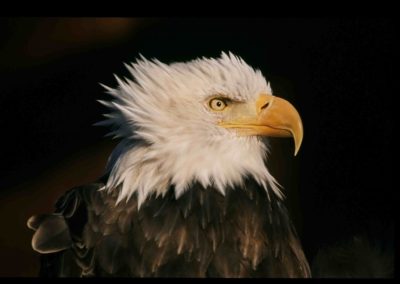
Bald Eagle
Bald Eagle (Haliaeetus leucocephalus)
“dałika” – Upper Inlet Dena’ina word

The bald eagle is named for the white head of the adult bird. Juveniles have mottled brown and white feathers until they develop white head and tail feathers at 4 to 5 years of age. Bald eagles are Alaska’s largest resident bird of prey with a wingspan of up to 7.5 feet (2.3 m) and weighing 8-14 pounds (3.6-6.4 kg). Bald eagles emit high pitched chirping or whistling noises and gull-like cries. Look and listen for these birds in the trees or flying around AWCC.

Ermine
Ermine (Mustela erminea)
“kaghelna” – Upper Inlet Dena’ina word

Ermine are members of the family Mustelidae which in Alaska includes mink, marten, river otter, sea otter, and wolverine. Ermine have a long body, short legs, long neck supporting a triangular head, round ears, and long whiskers. Their fur is reddish-brown above and creamy white below in summer, and changes to completely white in winter with the tip of the tail remaining black in all seasons. Ermine are often seen hunting for red-backed voles at AWCC.

fireweed

Fireweed (Chamerion angustifolium)
“tl’ik’desq’a” – Upper Inlet Dena’ina word

Fireweed is a tall showy plant that can range in color over the summer season from fresh green shoots to magenta flowers to fiery red leaves with white cotton seeds. It is a native perennial plant that grows prolifically around Alaska. This plant is an important source of seasonal food for numerous animals living at AWCC including moose, reindeer, North American porcupine, and others.

Lupine
Lupine (Lupinus nootkatensis)
“nantl’iłi duna” – Upper Inlet Dena’ina word

This plant in the bean family is a native perennial plant. In summer, it is notable for its palmate leaves and purple/blue flowers. This plant is also notable for having root nodules which fix nitrogen. Nitrogen is important for plant growth; it allows us to grow browse for animals in our care and pollinator plants for visiting hummingbirds. Plants like lupine restore usable nitrogen to the soil supporting a healthy native plant population at AWCC.

For an extra learning experience, book a Walk on the Wild Side Tour!

Tours fill up fast — reserve your wild adventure today!