Meet the Foxes

The red fox and arctic fox share the same habitat.

Red foxes and arctic foxes are omnivorous with an emphasis on carnivory. In most parts of Alaska, small rodents such as voles and lemmings are the most important year-round prey. Other food items include grouse, ptarmigan, squirrels, snowshoe hares, salmon, carrion, and berries, but this list is far from exhaustive. Foxes cache excess food when the hunting is good.

← back to All Animals

Meet Warren

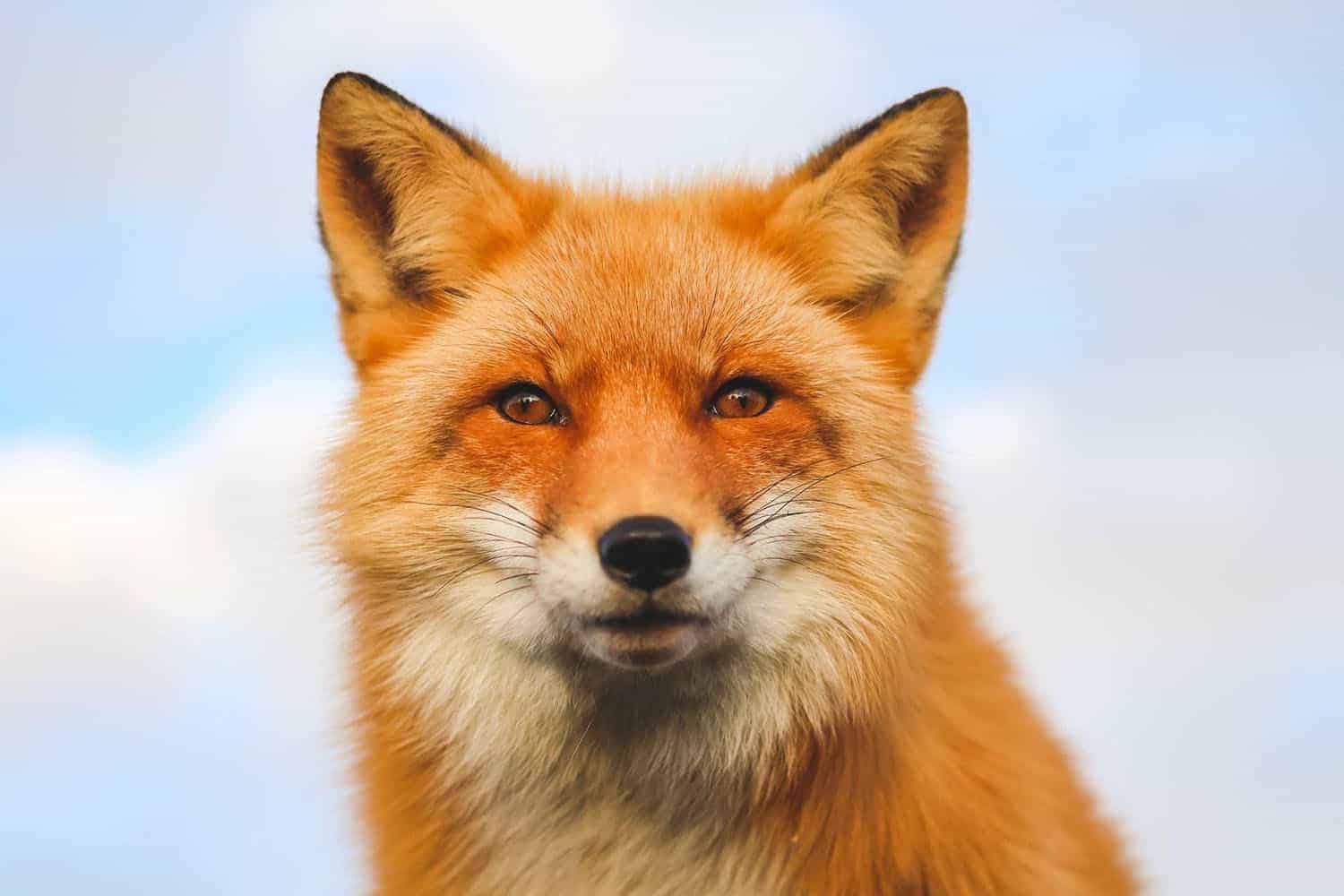
In the spring of 2024, AWCC welcomed the one-pound fox kit with open arms. Warren’s tale is a powerful reminder of the importance of coexistence and conservation.

It was a rainy spring day in Alaska’s Matanuska-Susitna Valley when a construction crew began clearing a site for a new development. The crew worked steadily, unaware of the small family of red foxes that had made their den in the brush nearby. Hidden beneath the undergrowth, a vixen had been raising her litter of kits, keeping them safe and well-hidden from the bustling world beyond. As the sounds of heavy machinery echoed across the valley, the mother fox quickly sensed the danger. One by one, she carefully moved her kits to safety, racing against time to protect her young in the chaos. Later, as the dust settled, one fox kit was still waiting for his mother to return. A member of the construction crew stumbled upon the small, orange bundle of fur. Assuming the kit was orphaned and couldn’t survive on his own, the worker gently scooped him up. While well intentioned, this was not only illegal but unwise. Only the Alaska Department of Fish and Game (ADF&G) or the Alaska Wildlife Troopers are legally allowed to remove orphaned mammals from the wild, and there is a chance that the fox was not truly an orphan. ADF&G was contacted eventually, but the fox kit had already been separated from his family long enough that it was no longer possible to reunite them. Young fox kits are dependent on their mothers for food and protection, and without intervention, his chances of survival were slim. Instead of being released back into the wild, where he might struggle alone, ADF&G made a decision that would change his life; they made a call to the Alaska Wildlife Conservation Center (AWCC).

AWCC welcomed the one-pound fox kit with open arms. Our staff, experienced in caring for orphaned and displaced wildlife, immediately began tending to his needs. We provided him with warmth, nourishment, and the care he would have received from his mother. We named him Warren after the local artist Amanda Rose Warren and her husband Don who have been long-time supporters of AWCC. Over time, Warren grew stronger, and his playful, curious nature emerged. Though he had lost his fox family, he had found a new home where he could thrive. Warren soon captured the hearts of our staff. With his bright red coat and lively personality, he has quickly become a favorite at the center. The AWCC team has worked tirelessly to ensure Warren has an environment that simulated the wild—complete with hills to climb, spaces to explore, holes to burrow in, and plenty of enrichment to keep his intelligent mind active.

Since Warren can never be released back into the wild—having been separated from his family at such a young age—he now serves as an ambassador for his species. Through stories like Warren’s, AWCC educates thousands of visitors each year about the challenges Alaska’s wildlife face as human development continues to expand into natural habitats. His tale is a powerful reminder of the importance of coexistence and conservation.

While the classic red color phase is the most common in Alaska, red foxes can be found with a few different colors in the wild. The term “silver fox” refers to black foxes with or without silver-tipped guard hairs. Any combination of red and black or silver is termed a “cross fox.” Red foxes remain the same color year-round, and colors have nothing to do with age or sex of the individual. As in dogs, foxes of different colors can be found in the same litter. You can differentiate a wild red fox from other wild canids by the white-tipped tail and black paws. Selective breeding in human care has created a multitude of additional color varieties among red foxes. Alaska is also home to artic foxes (Alopex lagopus). In tundra regions, where the ranges of the arctic and red foxes overlap, the red fox is dominant.

Meet Bert & Ernie

Bert and Ernie were transferred to AWCC after their previous facility closed. It is unknown how or why they came into human care. They are the first arctic foxes to live at AWCC.

Arctic foxes have short legs and bodies, short ears, and dense winter fur that gives them a stocky appearance compared to their slightly larger relative, the red fox (Vulpes fulva). Adult arctic foxes weigh 6 to 10 pounds (2.7-4.5 kg). On average they are 43 inches (109 cm) in length, including their tails which are about 15 inches (38 cm) long.

Arctic foxes molt twice each year, changing colors with the seasons. In summer, their face, legs, and upper parts of the body are covered with short, brown summer fur and the fur of the lower sides and abdomen is yellowish white. In winter, arctic foxes grow a dense coat that is all white. The seasonal change in coat allows them to camouflage well through the entire year. There are both white and blue color phases of arctic foxes. On the Aleutian and Probilof Islands, the blue color phase is more common. The blue color phase arctic foxes remain dark or charcoal colored year-round but are somewhat lighter colored in winter. The white color phase is more common in northern populations. While found in arctic regions, arctic foxes are also found throughout treeless tundra. Arctic foxes are nomadic. They will travel large distances across their range. They typically migrate toward the sea in fall and early winter and then reverse these movements in late winter and early spring in Alaska.

Arctic foxes are omnivorous. Their diets often change with the season. In summer, arctic foxes primarily eat small mammals, which include lemmings and tundra voles. Those that live near rocky cliffs along the coast depend on nesting seabirds as a food source. In winter, arctic foxes may travel out onto sea ice to eat remains of seals killed by polar bears. Other food sources may include berries, eggs, and scavenged remains of other animals. If food sources are plentiful, foxes may cache food in dens or among boulders for future use.

“Qusrkhaaq” is the Iñupiaq word for arctic fox. Iñupiaq are an Alaska Native people whose traditional homelands span from Norton Sound to the northeast boundary of Alaska and Canada. The arctic fox’s paws are sheathed in dense fur during the winter, unlike other canids, giving it the scientific Latin name “lagopus” (which means “rabbit footed”).

The naming theme for the animals that arrived at AWCC in 2025 was classic names. This theme along with the duo from Sesame Street inspired the names Bert and Ernie.

In Memory of Storm (2013–2025)

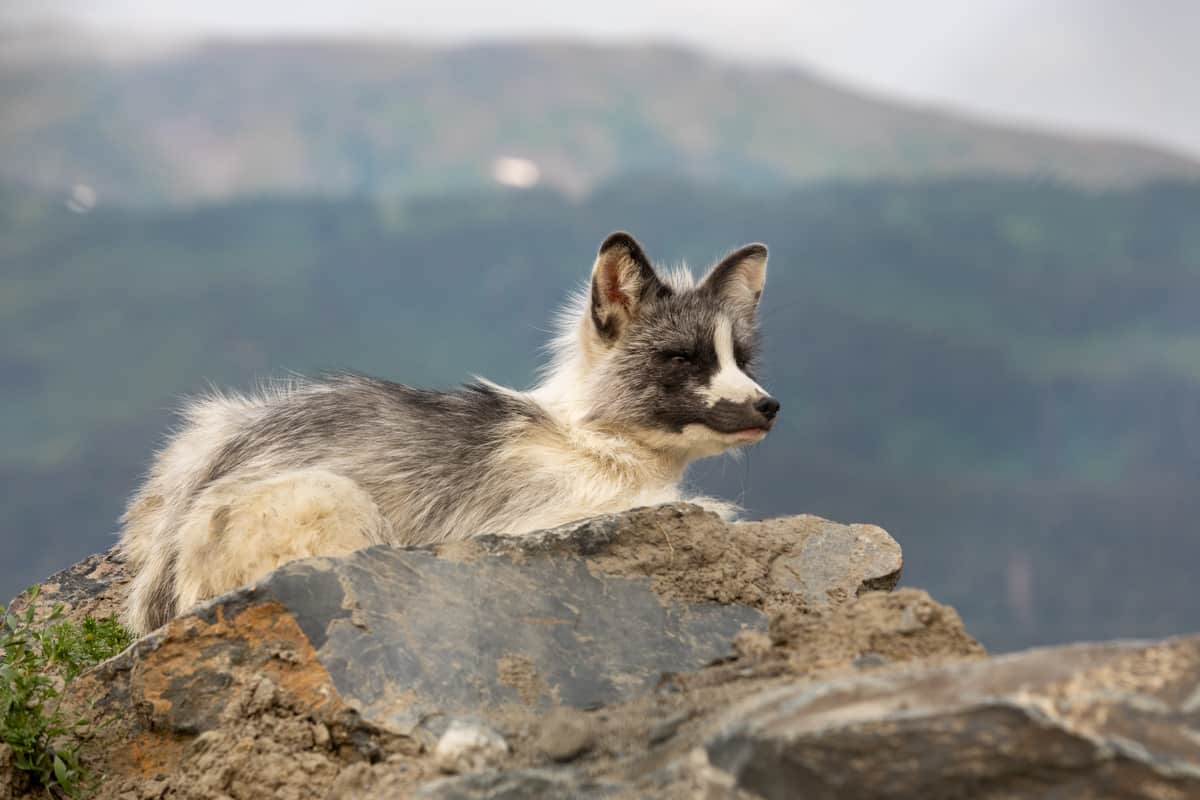
We’re saddened to share that Storm, our beloved marble red fox, has passed away following a sudden and aggressive cancer diagnosis.

Born in 2013 and selectively bred for her unique and eye-catching coat pattern, the result of generations of careful breeding for rare coloration of her striking black-and-white coat, she was kept illegally as a pet in Montana before being confiscated and brought to AWCC in 2016. While her distinctive appearance was striking, her early life came with challenges. Due to her time in captivity, she experienced some lasting effects—including the removal of several teeth—which required her to receive a specially prepared diet and attentive care. Thanks to the dedicated team at AWCC, she was able to settle into a safe, enriching environment where she could truly thrive.

She had her favorite routines: chicken and rabbit, scent enrichment days, digging her signature dens, and curling up in a cardboard box when the mood struck. She didn’t need to be loud to be loved—Storm had a quiet strength that made her unforgettable.

She helped educate thousands of visitors about the harms of fur farming and wildlife trafficking, and the importance of giving non-releasable animals safe, respectful homes.

Storm’s life mattered—and your support helped make it a good one. Thank you.

In Memory of Jade (2013–2025)

Our hearts are once again heavy as we share the loss of our beloved red fox, Jade.

Jade came to AWCC in June of 2013 after being found along a running trail in Anchorage by well-meaning joggers who believed he was orphaned. While their intentions were kind, only the Alaska Department of Fish and Game or Alaska Wildlife Troopers can legally remove orphaned mammals from the wild—and sometimes, young foxes are simply off exploring while their parents are nearby. It’s possible that Jade was doing just that.

Named after Alaska’s state gemstone, Jade became a treasure to everyone who met him. He was famous for his love of chin scratches—leaning in with a look that said, “that’s the spot,”—and had a way of winning over every heart. He greeted his caretakers daily with tail wags, and thanks to the dedication of his trainers, he was one of the vet team’s best patients. From his feisty early years in three different habitats to his peaceful later life with his dear friend Storm, Jade kept his home lively—digging, rearranging, and making it his own.

Jade and Storm arrived the same year and grew old together. Since Storm’s passing just a few weeks ago, Jade seemed to feel the absence of his longtime companion. Now, we can take comfort in imagining them together again.

Because of friends like you, Jade’s twelve years at AWCC were filled with enrichment, comfort, and respect. Your generosity ensures that every animal who calls AWCC home receives the same loving care—from their first day with us to their last.

Thank you for standing with us through the joy and the heartbreak. We couldn’t do this without you.

Tours fill up fast — reserve your wild adventure today!